
#30 You Are Solving the Wrong Problem
Four GTM signals early-stage B2B tech founders repeatedly misread.

August 7th, 2026
Strategic GTM insights for Founders, CEOs, and Investors focused on scaling early-stage B2B Tech (AI-native & AI-powered SaaS)
Real stories and operating lessons from inside complex B2B GTM environments.
**********************************************************************************
Over the last two months, I’ve watched founders make consequential decisions based on signals that were real but interpreted incorrectly.
The round is closed. “We’re ready to scale.”
The pipeline isn’t converting. “We need a VP Sales or a CRO.”
A competitor is struggling. “Let’s wait.”
An AI deal has a strong champion, a good pilot and available budget, yet six months later the relationship starts breaking down.
In each case, the signal was genuine. The problem was the interpretation.
The signals are real. The interpretation is wrong.
That is the thread running through the last four articles I published.
In each situation, the founder was trying to solve the visible problem while the real GTM issue sat one layer underneath — invisible, unaddressed, and compounding.
Here are four signals early-stage B2B tech founders repeatedly misread, and the illusions they create.
The illusion of being ready to scale
The signal: a few meaningful logos closed, a round raised, a pipeline being built.
The misreading: we have figured it out, we are ready to scale.
The reality: Maybe. Or maybe you’ve simply proved that a founder can personally close difficult deals. Those are not the same thing.
Product-Market Fit is not GTM readiness.
Most founders confuse a great product with a great go-to-market. But scaling is not a reward; it is an amplifier.
Venture capital does not create readiness. It amplifies whatever system already exists. If that system is built on founder dependency, lack of focus, improvised qualification, and uncodified process, scaling amplifies all of that. You are not accelerating growth. You are accelerating chaos.
Before the next round. Before the next hire. Before doubling the team. Run the test.
👉 Ready to Scale? The GTM Litmus Test for Complex B2B Tech Startups

The illusion that the answer is hiring
The signal: pipeline not converting, board pressure building, investors pushing for a senior GTM hire.
The misreading: we need an experienced CRO or VP Sales to fix this.
The reality is more uncomfortable: you cannot delegate a system that does not exist.
If the qualification happens in the founder’s head, if enterprise choreography isn’t codified, if Account Executives are not consistently successful, and the playbook lives in tribal knowledge passed between reps, then bringing in a VP of Sales does not solve the problem. It adds an expensive management layer on top of a structural vacuum, and gives the board a person to blame when that vacuum fails them.
The best revenue leaders on the market do not build GTM systems from scratch. Unless they are co-founders.
They inherit ones that already kind of work and scale them. Until the system exists, the CRO is the founder CEO. Not because they want that role. Because no one else can build what only they currently understand.
That is the job nobody announces and everybody eventually does.
👉 The CEO-CRO Nobody Wants To Be

The illusion that waiting reduces risk
The signal: a competitor gets acquired, or starts burning enterprise pilots they cannot execute.
The misreading: let’s wait. Once their clients are frustrated enough, they will come to us. Most founders watch.
The reality: this is a time window with a hard close.
When a competitor loses control of their narrative, their enterprise clients enter a period of unusual receptiveness. The champion who bought that solution is quietly asking whether they made the right call. The roadmap conversation is getting vague. Support becomes slower. Customer Success becomes reactive and defensive. Onboarding was a disaster.
That window doesn't last long. Then the new ownership consolidates the narrative, or the prospect domesticates the pain and stops blaming the vendor and starts blaming the category. Once that happens, you are no longer displacing a competitor. You are rebuilding trust in an entire solution space.
Patience in this moment is not strategic restraint. It is wasted window.
The market does not reward patience. It rewards presence.
👉 When a Competitor Bleeds: The Opportunistic GTM Playbook

The illusion that everyone is buying the same thing in AI
The signal: the champion is engaged, the demo went well, the budget exists, the use case is concrete.
The misreading: we know what they are buying.
The reality is that there are often two business cases active simultaneously inside the same enterprise, and the vendor is only seeing one of them.
The champion is buying augmentation. AI that helps their specialists work faster. The ROI is productivity, the buyer is an operational lead, the budget is functional and approvable without C-suite involvement.
Meanwhile, three floors up, a different conversation is happening. The CFO is talking about labour costs. The COO is asking how many of these roles will eventually exist. The board is discussing organisational redesign. Their business case is transformation, not augmentation. The budget is strategic, the sponsor is different, and the approval process requires a completely different conversation.
Same product. Completely different economics. And the vendor is pricing, qualifying, and structuring contracts for the business case the champion describes, while the real decision is being made in a room they have never entered.
There is one question that surfaces the gap. Almost no one asks it.
“If this works exactly as expected over the next three years, are your specialists still doing the same work, only faster? Or are they doing something fundamentally different?”
That answer changes everything.
👉 AI Doesn’t Just Change The Product. It Changes The Business Case.
The thread that connects all four
A funding round mistaken for readiness.
A leadership gap mistaken for a hiring problem.
A temporary market window mistaken for a reason to wait.
An operational use case mistaken for the real economic decision.
Four different situations. The same underlying pattern.
The signal is visible. The real GTM problem sits underneath it.
Complex GTM starts with learning to read those signals correctly: readiness before scale, ownership before delegation, timing before patience, economics before pricing.
Growth does not create clarity. It amplifies whatever clarity, or confusion, already exists.
If you found this useful, forward it to a founder or investor who needs to hear it.
If someone forwarded this to you, you can subscribe here.
What resonates most?
Luigi
Featured images:
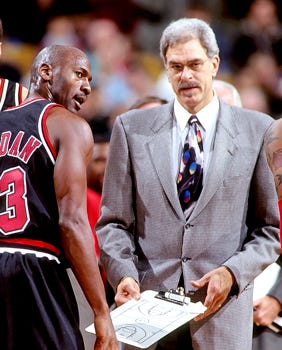
Steve Lipofsky (Lipofsky.com), CC BY-SA 4.0, via Wikimedia Commons.